



September 19, 2025
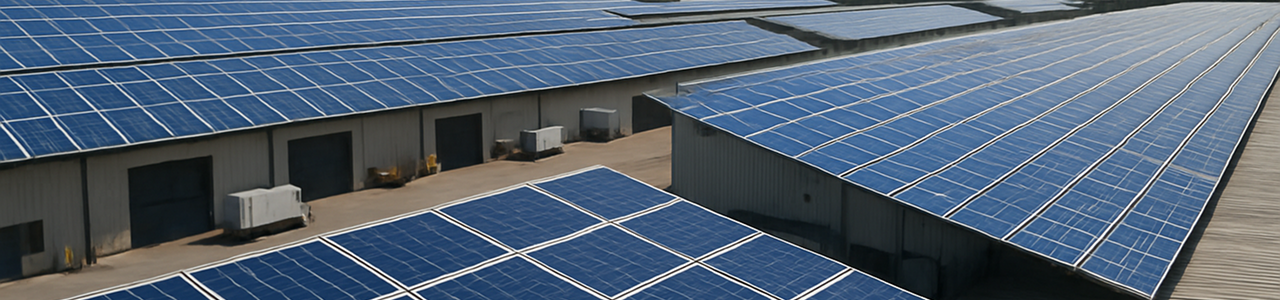
Commercial and industrial (C&I) customers often have higher energy intensity and demand charges — meaning solar can yield outsized financial returns. For manufacturing units, cold storage, or large offices, a properly designed solar project reduces energy costs, increases energy independence, and can improve sustainability reporting.
DirecLoad profiling
Understand hourly demand and consumption patterns. If peak demand occurs during the day, on-site generation directly reduces demand charges.
Sizing strategy
For many C&I sites, a hybrid approach works best: build a base PV capacity sized to cover day-time loads and add storage if load-shifting or islanding is needed.
Capex & economies of scale
Installation cost per kW typically falls as system size grows. Larger projects (100 kW+) qualify for better pricing, and payback windows shrink.
Net metering vs gross metering
Policy impacts revenue modeling. Some DISCOMs offer favorable feed-in tariffs for large exports; others require wheeling arrangements.
Interconnection & approvals
Utility approvals, evacuation study, and transformer upgrades are often required — early engagement with DISCOM avoids delays.
Proudly Designed by :
OCTONION  DESIGN

👋 Hi! How can we help you?
Start Chat